How to mount BWT files?

About BWT:
Burrows-Wheeler transform (BWT, also called block-sorting compression), is an algorithm used in data compression techniques such as bzip2. It was invented by Michael Burrows and David Wheeler in 1994 while working at Digital Systems Research Center in Palo Alto, California.It is based on a previously unpublished transformation discovered by Wheeler in 1983.
> WinMount supports mounting BWT file as a virtual disk, there are 4 ways:
The 1st method.
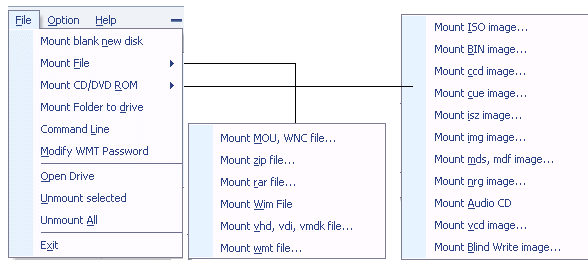
1) In the "Options", set BWT to be associated with WinMount.

2) Double-click a BWT file in the Resource Manager, WinMount would assign a new virtual disk for the BWT file;
The 2nd method.
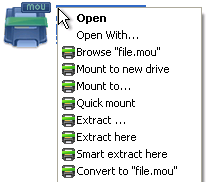
Right-click a BWT file, choose "WinMount3 -> Mount to new drive", WinMount would assign a new virtual disk for the BWT file;

. Mount to new drive : Mount the BWT file to a new virtual drive.
. Mount to...: Assign a disk letter for the BWT file. (Refer to "How to assign a disk?" on the bottom of this page.)
The 3rd method.
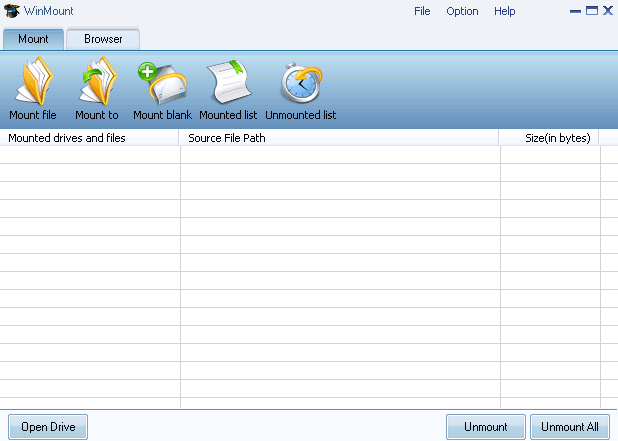
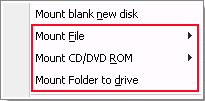
1) Click the button "Mount File" on the toolbar of WinMount main interface;

2) Select a BWT files, click "ok". WinMount would assign a new virtual disk for the BWT file;
The 4th method.
Drag a BWT file to WinMount main interface directly, WinMount would assign a new virtual disk for the BWT file;
How to assign a disk?
Of course, you can assign a disk for the BWT file, such as H: or K: or whatever you like.
1) Click the button "Mount to" on the toolbar of WinMount main interface( or right-click the BWT file and select "Mount to...").

2) Select a BWT file, select a drive, then WinMount would mount the BWT file to the assigned disk.

You can also input a path for the BWT file.
For example, select "H:\" and input "folder\folder1", then the BWT file would be mount to "H:\folder\folder1".


WinMount formats: