How to mount ISO files?

About ISO:
ISO image is a term commonly associated with CD and DVD burning. An ISO image (or .ISO file) is a computer file that is an exact copy of an existing file system. An ISO can contain the entire contents of a CD-ROM disc or CD medium. ISO files are typically created through a software application that will open, create, edit, and extract CD or DVD image files, then convert the extracted image to an ISO file, easily allowing users to burn an exact copy of the original onto CD or DVD.
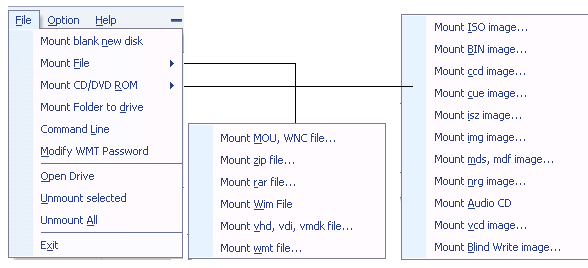
> WinMount supports mounting ISO file as a virtual disk, there are 4 ways:
The 1st method.
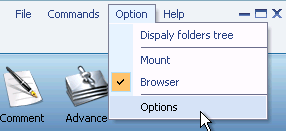
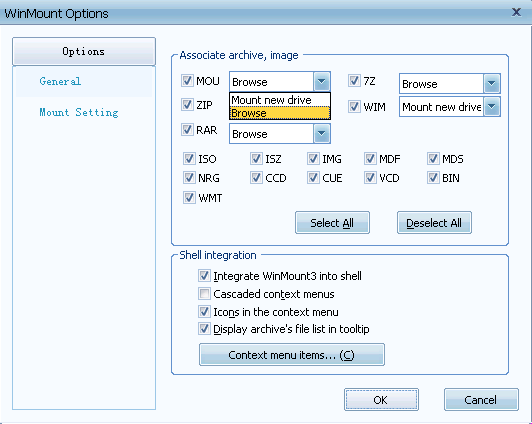
1) In the "Options", set ISO to be associated with WinMount.

2) Double-click a ISO file in the Resource Manager, WinMount would assign a new virtual disk for the ISO file;
The 2nd method.
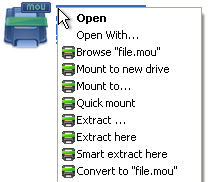
Right-click a ISO file, choose "WinMount3 -> Mount to new drive", WinMount would assign a new virtual disk for the ISO file;

. Mount to new drive : Mount the ISO file to a new virtual drive.
. Mount to...: Assign a disk letter for the ISO file. (Refer to "How to assign a disk?" on the bottom of this page.)
The 3rd method.
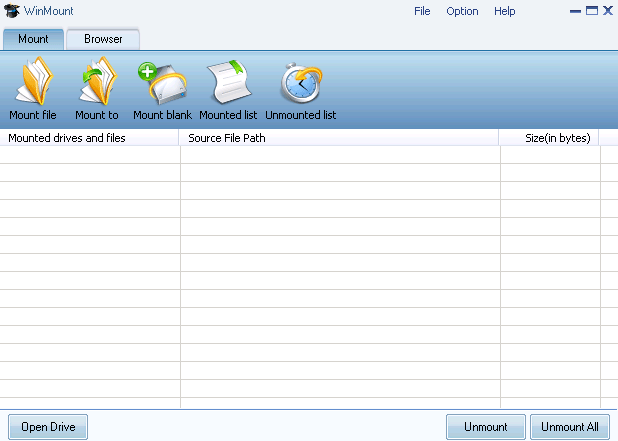
1) Click the button "Mount File" on the toolbar of WinMount main interface;

2) Select a ISO files, click "ok". WinMount would assign a new virtual disk for the ISO file;
The 4th method.
Drag a ISO file to WinMount main interface directly, WinMount would assign a new virtual disk for the ISO file;
How to assign a disk?
Of course, you can assign a disk for the ISO file, such as H: or K: or whatever you like.
1) Click the button "Mount to" on the toolbar of WinMount main interface( or right-click the ISO file and select "Mount to...").

2) Select a ISO file, select a drive, then WinMount would mount the ISO file to the assigned disk.

You can also input a path for the ISO file.
For example, select "H:\" and input "folder\folder1", then the ISO file would be mount to "H:\folder\folder1".


WinMount formats: